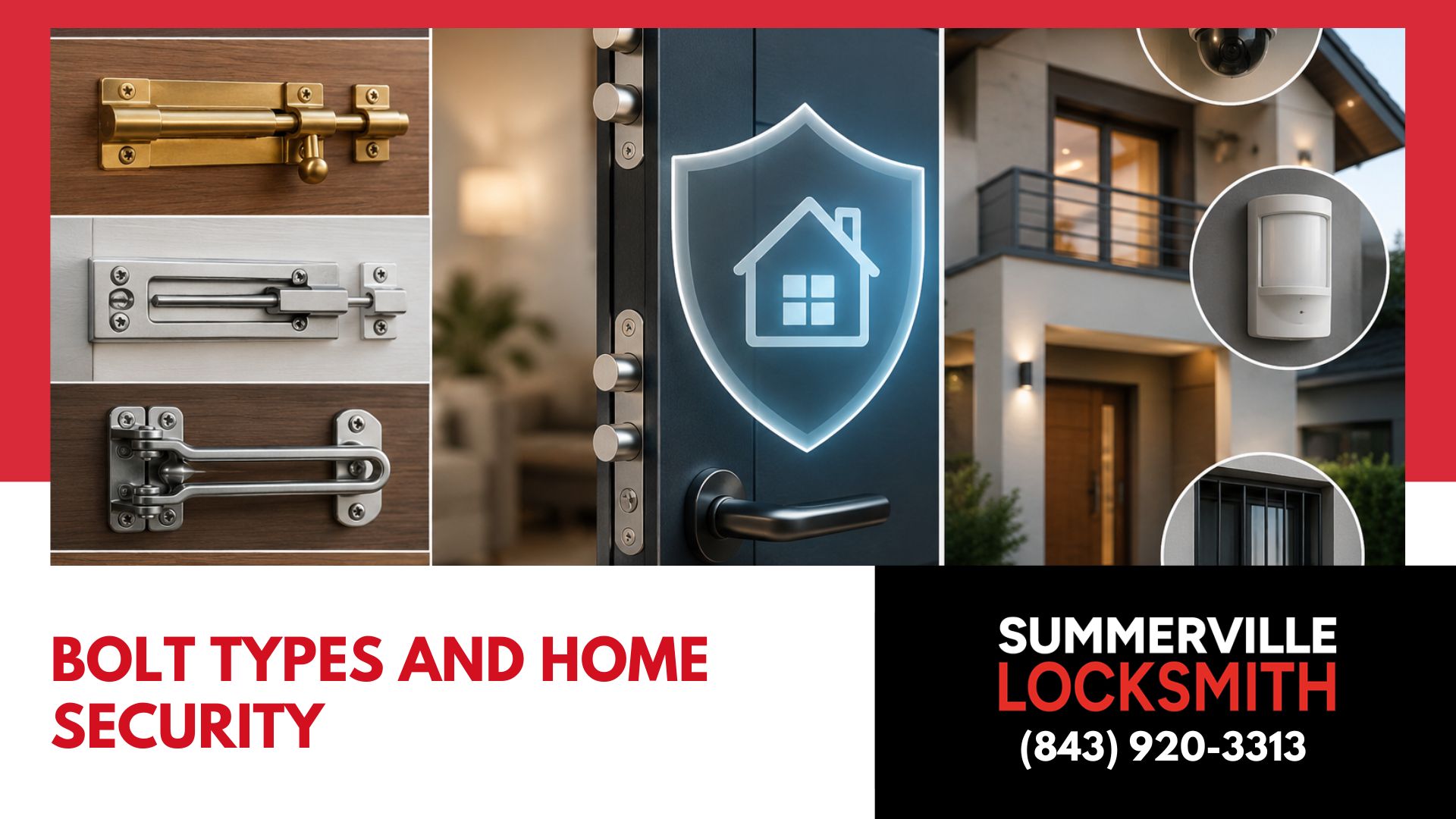
Home security starts with the strength of the locks protecting your doors. Many homeowners focus on alarms and cameras first. In reality, the physical hardware on a door really determines how difficult it is for someone to gain entry. Different bolt types serve different purposes, and understanding how they work can help you make better security decisions for your property. Modern locks are designed with features that resist picking, drilling, bumping, and forced entry attempts. At Summerville Locksmith, we help homeowners choose the right security solutions throughout the broader Summerville area, to locations everywhere from Nexton to Knightsville.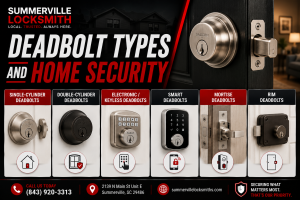
Deadbolts and Why They Matter
Deadbolts are one of the most important components of residential security. Unlike spring latch locks, deadbolts cannot simply be pushed open with force or a thin object. A standard single cylinder deadbolt uses a key on the outside and a thumb turn on the inside, while double cylinder models require a key on both sides. Grade 1 deadbolts, which are tested by ANSI for durability and security, are considered the strongest residential option. According to FBI burglary data, unlawful entry remains one of the most common methods used during residential break-ins. Proper installation matters just as much as lock quality because even a strong deadbolt can fail if installed into a weak door frame.
Single-Cylinder Deadbolts
A standard residential deadbolt featuring a keyed exterior and an interior thumb-turn for quick and convenient locking.
Double-Cylinder Deadbolts
Designed with keyed access on both sides, offering added protection for doors located near glass windows or panels.
- Electronic / Keyless Deadbolts
Modern deadbolts that eliminate traditional keys by using a keypad, touchscreen, or biometric access system. - Smart Deadbolts
Advanced locking systems that connect to smartphones through Wi-Fi or Bluetooth for remote access and monitoring. - Mortise Deadbolts
Heavy-duty lock systems installed within the door itself, commonly used for enhanced strength and long-term durability. - Rim Deadbolts
Surface-mounted deadbolts typically used as an additional layer of security on older or specialty doors
Deadbolt Misconceptions – Some homeowners believe all deadbolts offer equal protection. This isn’t true! In reality, lock grade, installation quality, and door condition all affect security.
Spring Bolt Locks and Latch Mechanisms
Spring bolt locks are usually found on residential knob locks and lever handle locks. These systems use a spring-loaded latch that retracts in when the handle turns. While convenient for daily use, spring bolts alone are not considered high security because they are easier to bypass than deadbolts! Many burglars target doors that rely only on latch locks without secondary reinforcement. A properly installed deadbolt should always accompany a spring latch on exterior doors. Lock alignment is also important because a poorly aligned latch can weaken the effectiveness of the entire locking system.
- Spring Latch Locks – These locks automatically lock when the door closes. They are very useful for convenience but should not be your only layer of protection.
- Latch Guards – Latch guards cover the gap between the door and frame. This helps prevent forced entry using pry tools.
- Lever Handle Locks – Lever locks are commonly used for accessibility purposes. Commercial-grade versions can offer strong durability when paired with deadbolts.
- Door Alignment Issues – A lock that sticks or jams may indicate frame shifting or hinge wear. Correcting alignment improves both security and lock lifespan.
- Keyed Entry Knobs – These locks are widely used on front doors. To be honest, they really work best as a secondary security layer beneath a deadbolt.
- Misunderstanding Convenience Locks – Some homeowners assume a locking knob alone is enough protection. Security experts recommend combining latch locks with stronger deadbolt systems.
High Security Bolts and Advanced Lock Technology
High security locks are designed to resist advanced attack methods such as lock bumping, picking, and drilling. These systems often use patented keyways and hardened steel components. Some high security cylinders cannot be duplicated without proof of ownership, which improves key control. A University of North Carolina at Charlotte study found that many burglars avoid homes that appear difficult to enter quickly. This is one reason why visible security hardware can help deter criminal activity. High security systems are especially valuable for homeowners with expensive valuables, home offices, or frequent travel schedules.
- Pick Resistant Cylinders – These locks contain special pin configurations that make traditional lock picking more difficult. They are commonly used in high security homes and businesses.
- Drill Resistant Hardware – Hardened steel inserts help protect internal lock components from drill attacks. This improves durability during attempted forced entry.
- Restricted Key Systems – Restricted keys cannot easily be copied at standard hardware stores. This provides much, much stronger control over who can duplicate keys.
- Electronic Lock Integration – Advanced systems may connect to alarms or smart home devices. This allows homeowners to monitor activity remotely.
- Key Control Benefits – Knowing exactly who has copies of your keys helps reduce unauthorized access risks. Businesses often rely heavily on key control systems. This makes your property way more secure!
- High Security Myths – Some people believe advanced locks are only necessary for businesses. Residential properties can also benefit from stronger security hardware.
Choosing the Right Bolt for Your Home
Selecting the correct bolt type depends on your home’s layout, daily habits, and overall security goals. Exterior entry doors should always use strong deadbolts combined with reinforced hardware. Sliding doors, garage entry doors, and side entrances may require different locking solutions based on their design. Professional locksmiths can inspect existing hardware and identify weak points that homeowners may overlook. Weather exposure, door material, and traffic volume also influence lock performance over time. We provide residential locksmith services in Summerville, to locations everywhere from Sangaree to Lincolnville.
- Front Door Security – The front door is often the primary entry point into a home. Strong deadbolts and reinforced frames improve overall protection.
- Sliding Door Bolts – Sliding glass doors benefit from secondary security bars and reinforced locking systems. These reduce the risk of forced entry.
- Garage Entry Door Locks – The interior garage door should be secured like any exterior entrance. Many homeowners overlook this important access point.
- Weather Resistant Locks – Coastal humidity and rain can affect lock performance. Corrosion-resistant hardware lasts longer in South Carolina climates.
- Professional Lock Installation – Correct installation improves lock effectiveness and durability. Misaligned hardware can reduce overall security.
- Routine Lock Maintenance – Locks should be inspected periodically for wear and damage. Lubrication and adjustments help prevent unexpected failures.