The price of replacing a car key swings wildly depending on what kind of key your vehicle uses. People hear a quote and assume they’re being overcharged, when in reality the gap between a $15 key and a $400 key comes down to the technology inside it. Here’s what drives the cost, and where you can realistically save money.
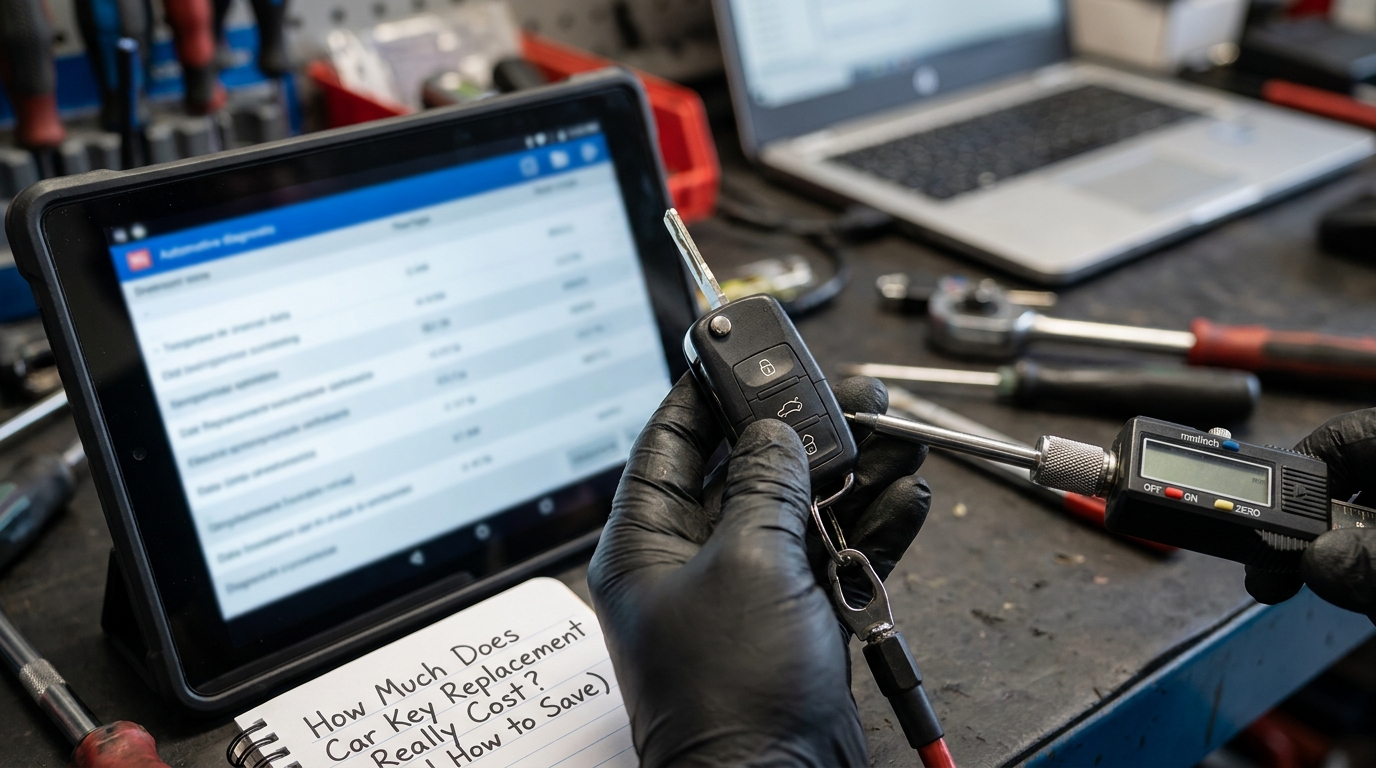
The Four Types of Car Keys (and What Each Costs)
Cost tracks almost perfectly with how sophisticated your key is. Older cars are cheap. Newer cars with chips and electronics are not.
Basic metal keys (pre-1995 or so)
These have no electronics. A locksmith cuts a blank to match your lock. You’re usually looking at $10 to $25. Nothing to program, nothing to fail.
Transponder keys
Most cars from the mid-1990s onward use a chip embedded in the plastic head of the key. The chip talks to your ignition, and the engine won’t start without the right code. These run $60 to $180 because the key has to be cut and then programmed to your specific vehicle.
Remote head keys and flip keys
These combine the transponder chip with the lock/unlock buttons in one unit. Expect $120 to $300, depending on make and model. The electronics and programming push the price up.
Smart keys and push-to-start fobs
Proximity fobs that let you start the car with a button are the most expensive. Parts alone can be $150 or more, and programming is involved. Total cost often lands between $200 and $450. We handled exactly this kind of job with a Nissan Rogue key fob replacement for a repeat customer, and the fob electronics were the bulk of the bill.
Why the Dealer Almost Always Costs More
Dealerships can make keys, but they rarely do it cheaply or quickly. A few reasons:
- They often order the key from a central parts supplier, which means days of waiting.
- They may require the car be towed in if you have no working key.
- Dealer labor rates are built around service department pricing, not key cutting.
A locksmith comes to you, cuts and programs on site, and usually charges less for the same key. The one case where the dealer makes sense is a rare or very new model where the programming data isn’t yet available to the aftermarket.
The Hidden Costs People Forget
The key itself is only part of the quote. Watch for these:
- Programming fees. Some providers list the key cheap and charge separately to program it. Always ask for the all-in price.
- Service call or trip charge. Mobile service may add a flat fee, especially after hours.
- All-keys-lost situations. If you have zero working keys, programming is harder and takes longer. This can add $50 to $100 over a spare-key job.
- Ignition problems. Sometimes the key isn’t the issue at all. A worn ignition cylinder can mimic a bad key, which is a different repair. We’ve seen this plenty, like the ignition repair that got a customer back on the road when a new key alone wouldn’t have fixed it.
How to Actually Save Money
You have more control over this bill than you think.
Make a spare before you lose the last one
This is the single biggest money-saver. Cutting a duplicate while you still have a working key is far cheaper than an all-keys-lost job. If you only have one key, get a backup made now.
Ask for an all-in quote in writing
Get the total that includes the key, cutting, programming, and any trip fee. A reputable locksmith will give you one number before starting.
Use a locksmith instead of defaulting to the dealer
For most vehicles the savings are real and the turnaround is same-day. Compare both if you have time.
Check your insurance and warranty
Some auto insurance policies and roadside plans cover key replacement. New-car warranties sometimes cover a fob failure that isn’t your fault. Worth a five-minute phone call.
Keep the key number
If you have the key code from your original purchase paperwork, a locksmith can sometimes cut a key faster and for less.
When to Skip the Phone Quote and Just Come In
Phone quotes are estimates. The real price depends on your exact year, make, model, and whether you have a working key. Bringing the car and any existing keys in lets us confirm the right part and price on the spot. If you’re weighing the options, there are good reasons that visiting an in-store locksmith makes a difference for jobs where accuracy matters.
The Takeaway
Expect $10 to $25 for a basic key, $60 to $180 for a transponder, and $200 to $450 for a smart fob. The cheapest move you can make today is cutting a spare while your current key still works, because an all-keys-lost replacement always costs more. Ask for one all-in price, compare a local locksmith against the dealer, and check whether your insurance already covers it.